Cognizant Internship
A summer internship experience with an excellent in-house agency that specializes in internal marketing and business design work for the IT and consulting industries.
What
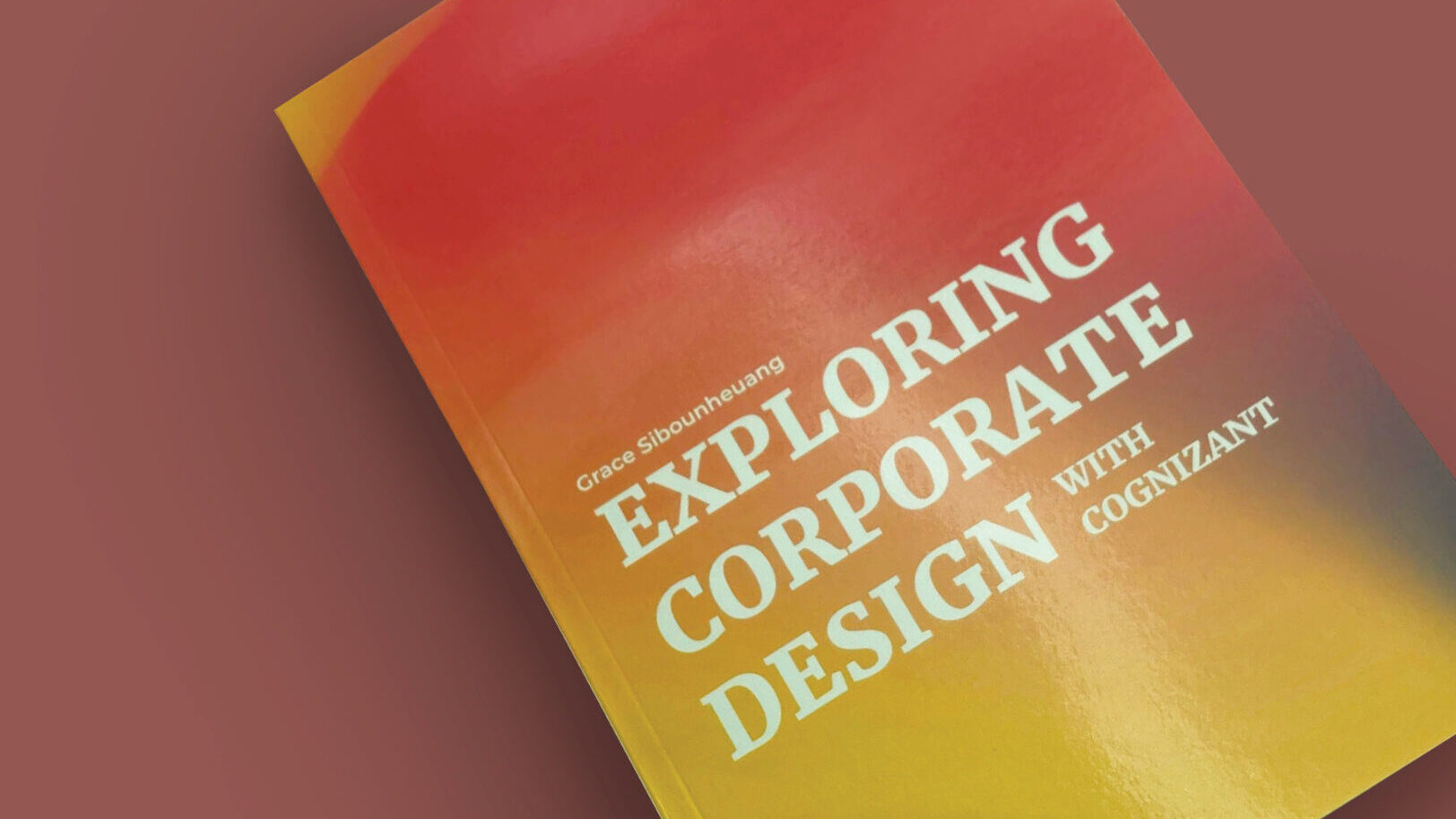
A booklet recording my experience at Cognizant and includes documentation of key projects I worked on and weekly task descriptions.
Why
For one requirement of my university’s internship elective course, I was tasked with documenting my experience as a printed booklet.
How
At the beginning of my internship, I knew it was important to document as much of the experience as possible knowing that the information I collected would be crucial to the booklet I needed to create. Thus, I developed a system of taking photos of myself working and writing down my daily tasks in my sketchbook. Additionally, I made sure to keep track of the types of projects I worked on and constructed mockups for specific projects in order to present the projects in a portfolio-like style.
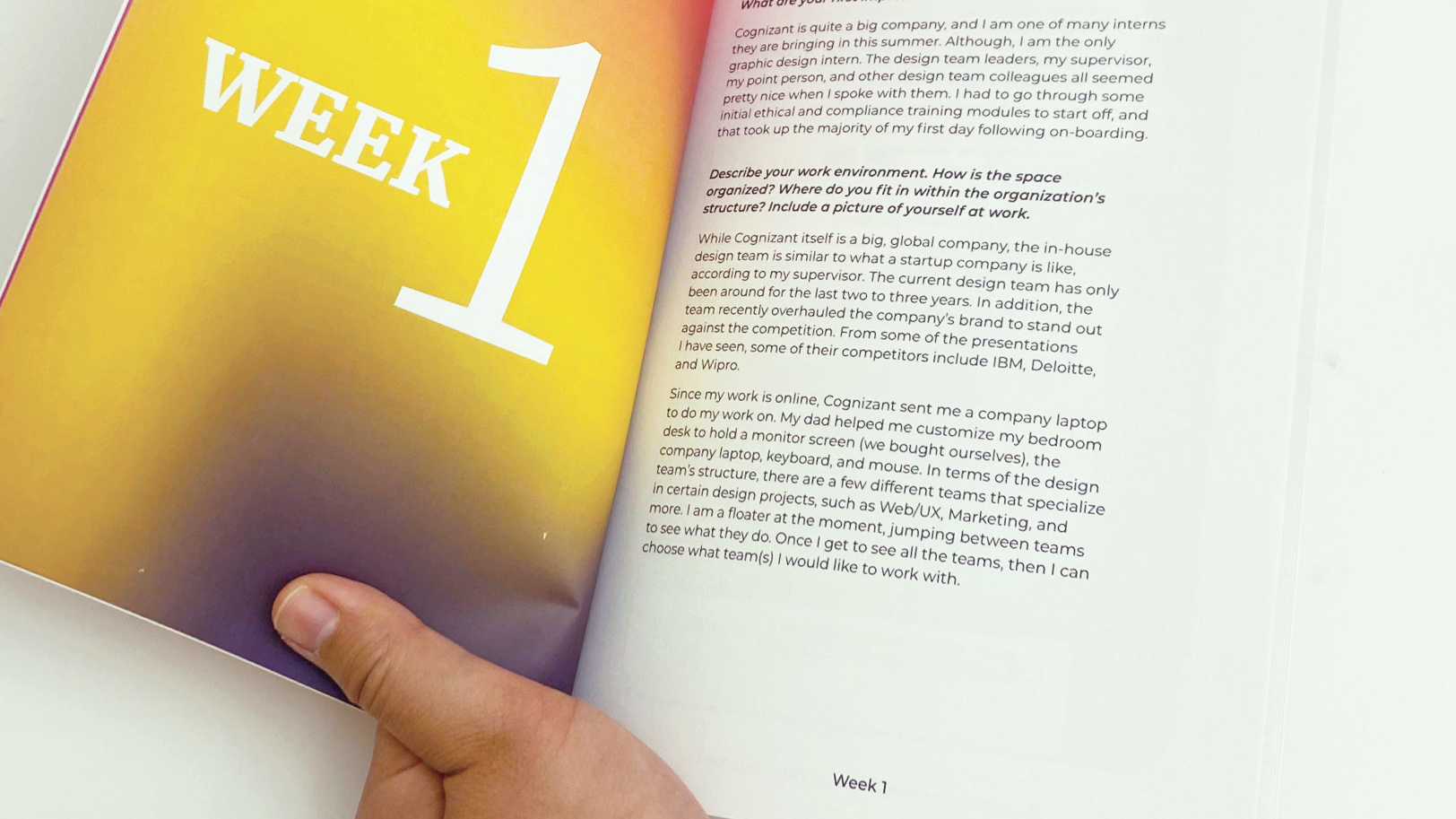
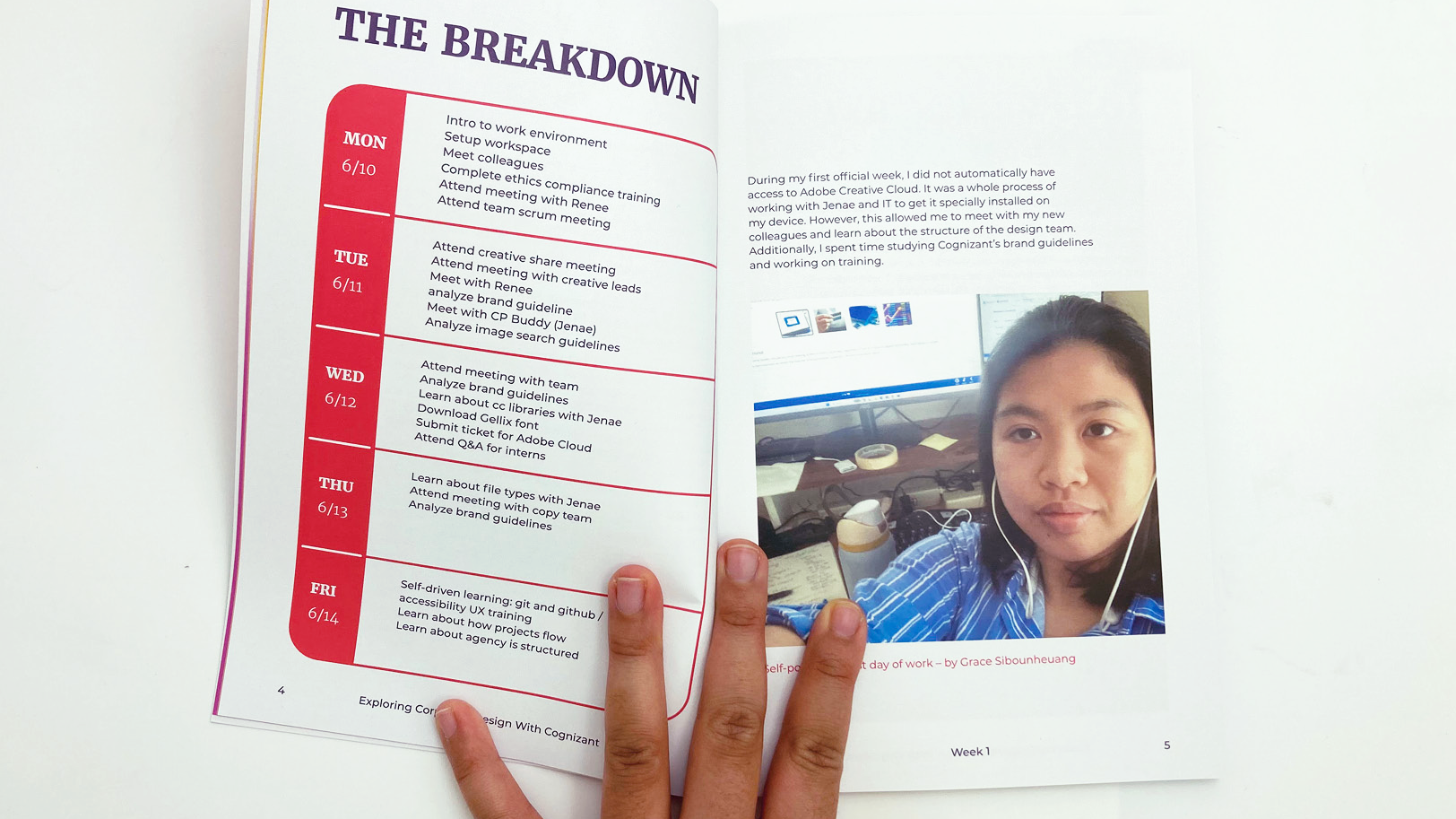
Once the internship was over and I finished collecting all of the necessary materials, I was faced with the biggest challenge when designing a booklet: determining the basic layout structure.
After much trial-and-error in InDesign, I found that a simple-but-structured layout would work best with my content, especially considering how rectangular my project outputs and mockups were. However, I did find room for experimentation through corner variation, gradient maps, and a bright color palette. In terms of gradients and color, I pulled inspiration from one of Cognizant’s less-used gradient maps as a subtle reference to the company.
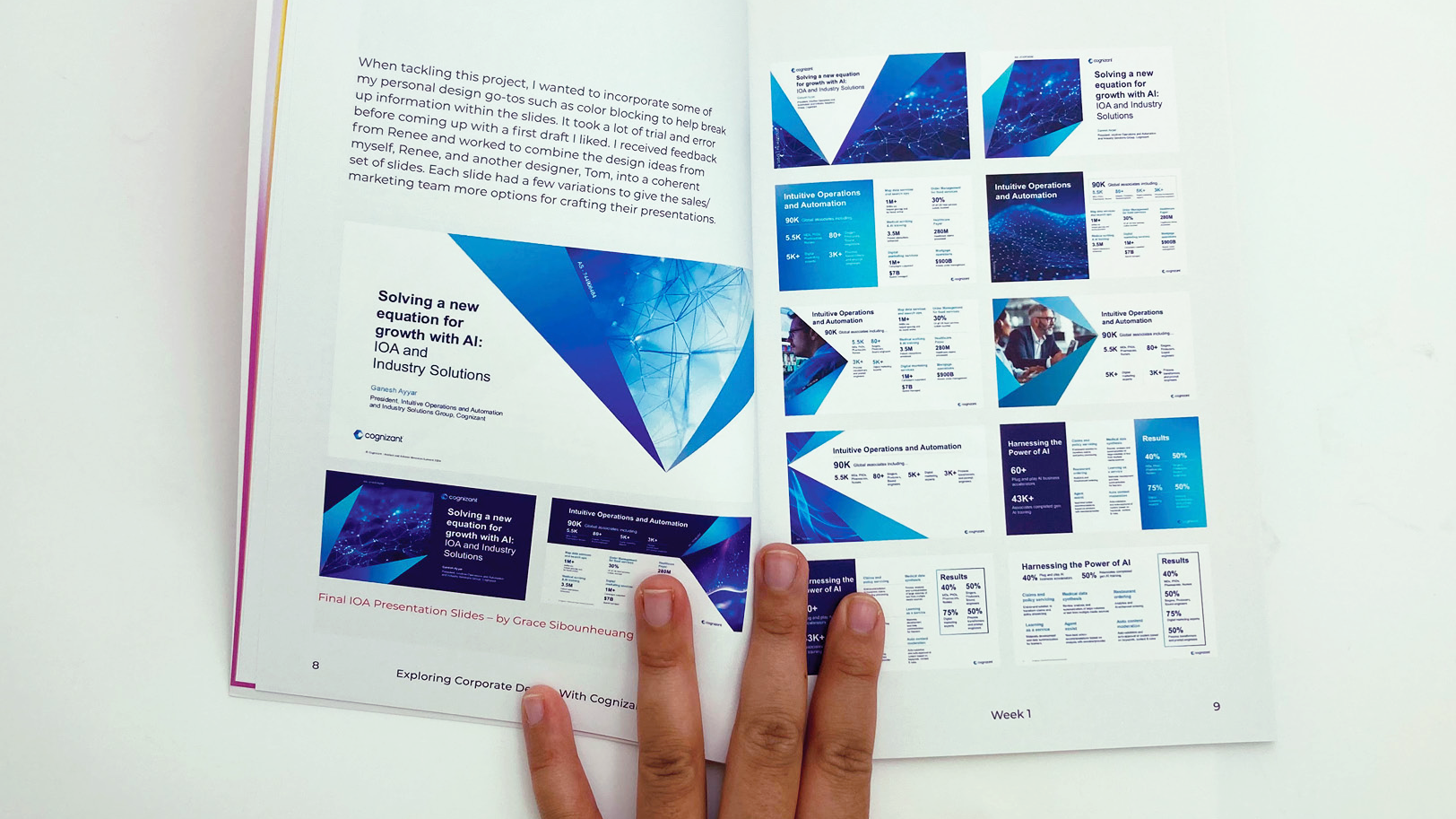
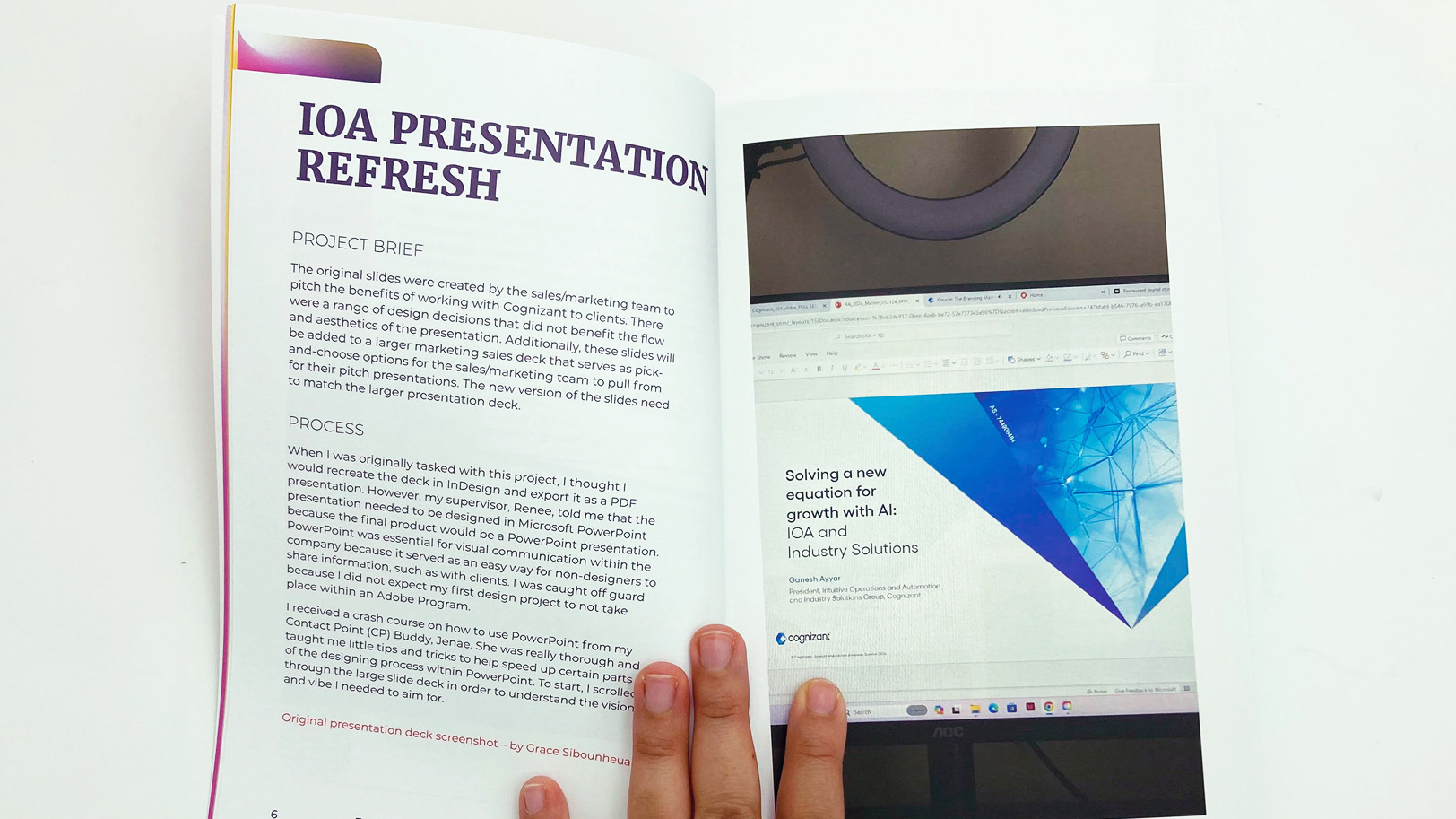
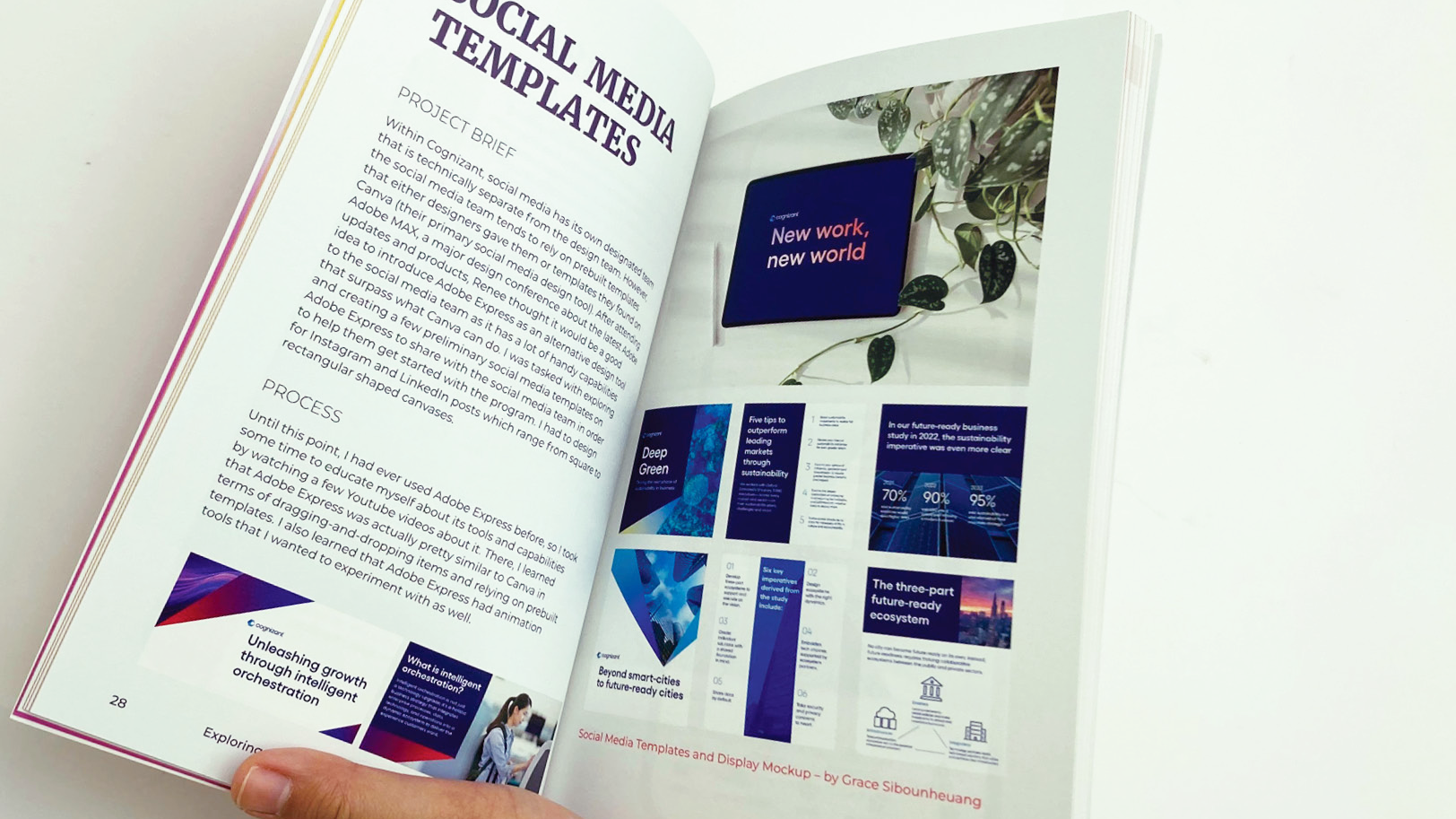
Due to the implementation of a simple-but-structured layout, I could introduce large, blown-up images of project files or mockups that took up 50% or more of the spread. This allowed for creative breaks that kept the project descriptions from becoming too repetitive while highlighting what I considered the most impressive of the projects I completed during my internship.
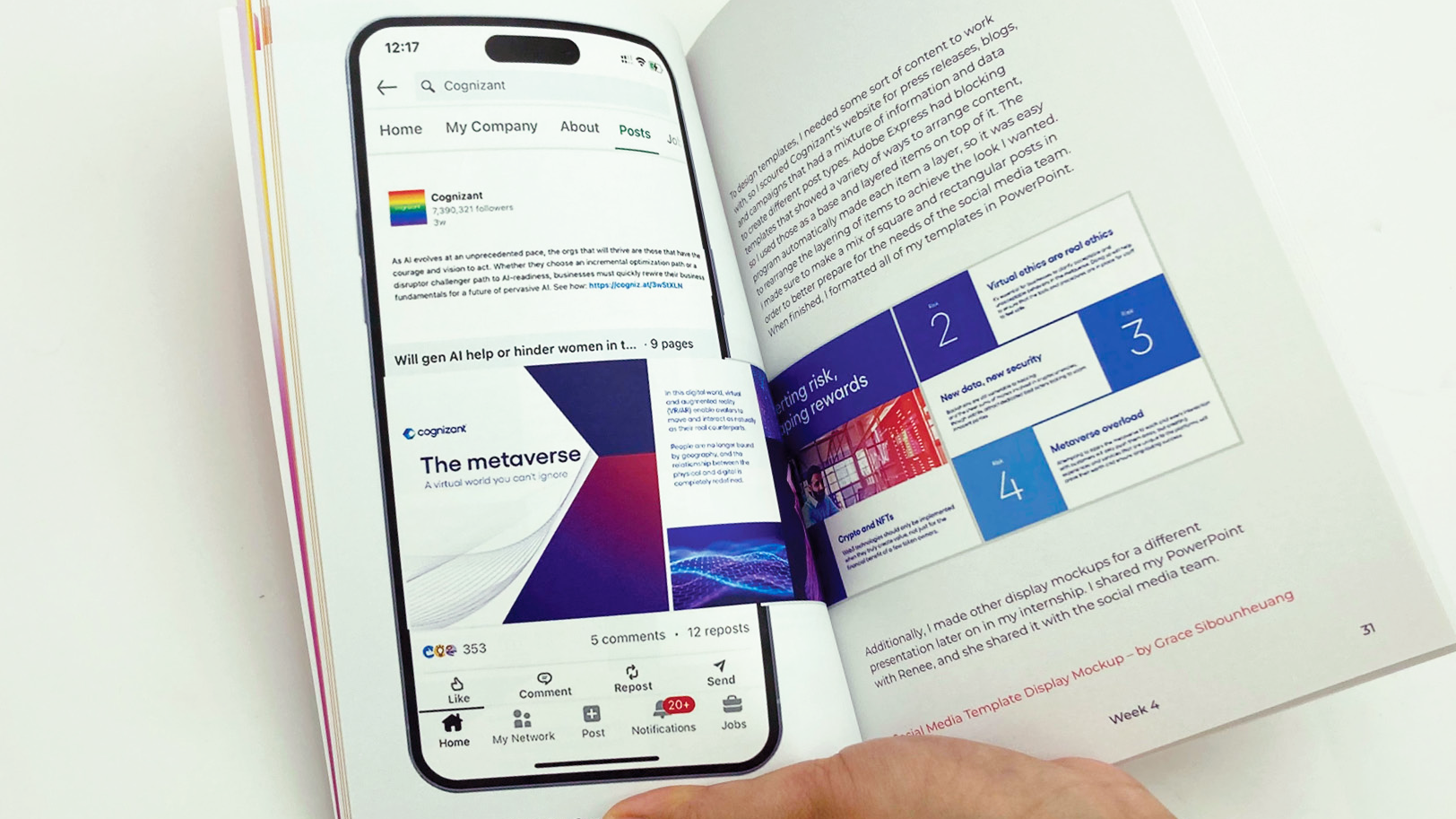
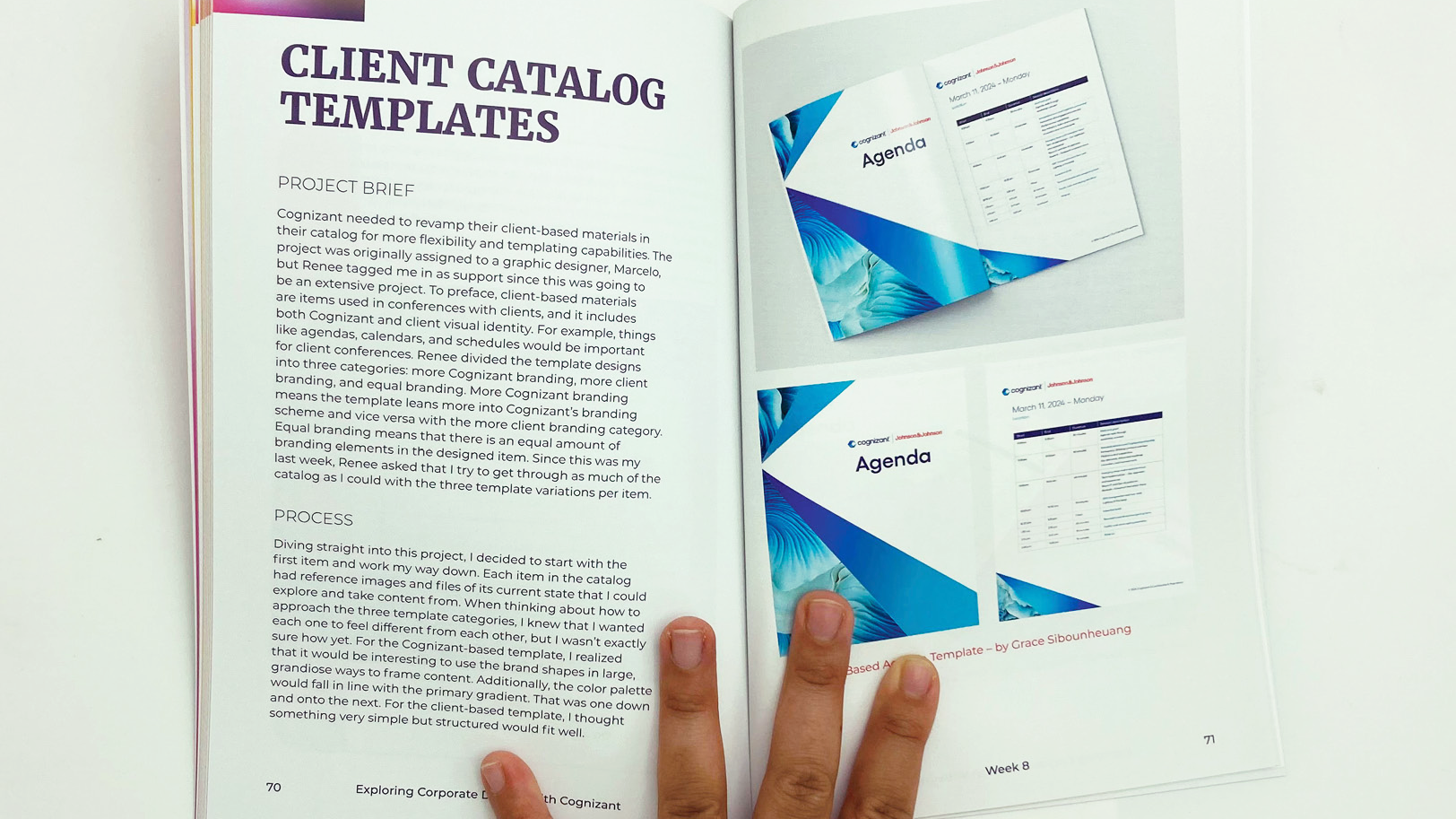
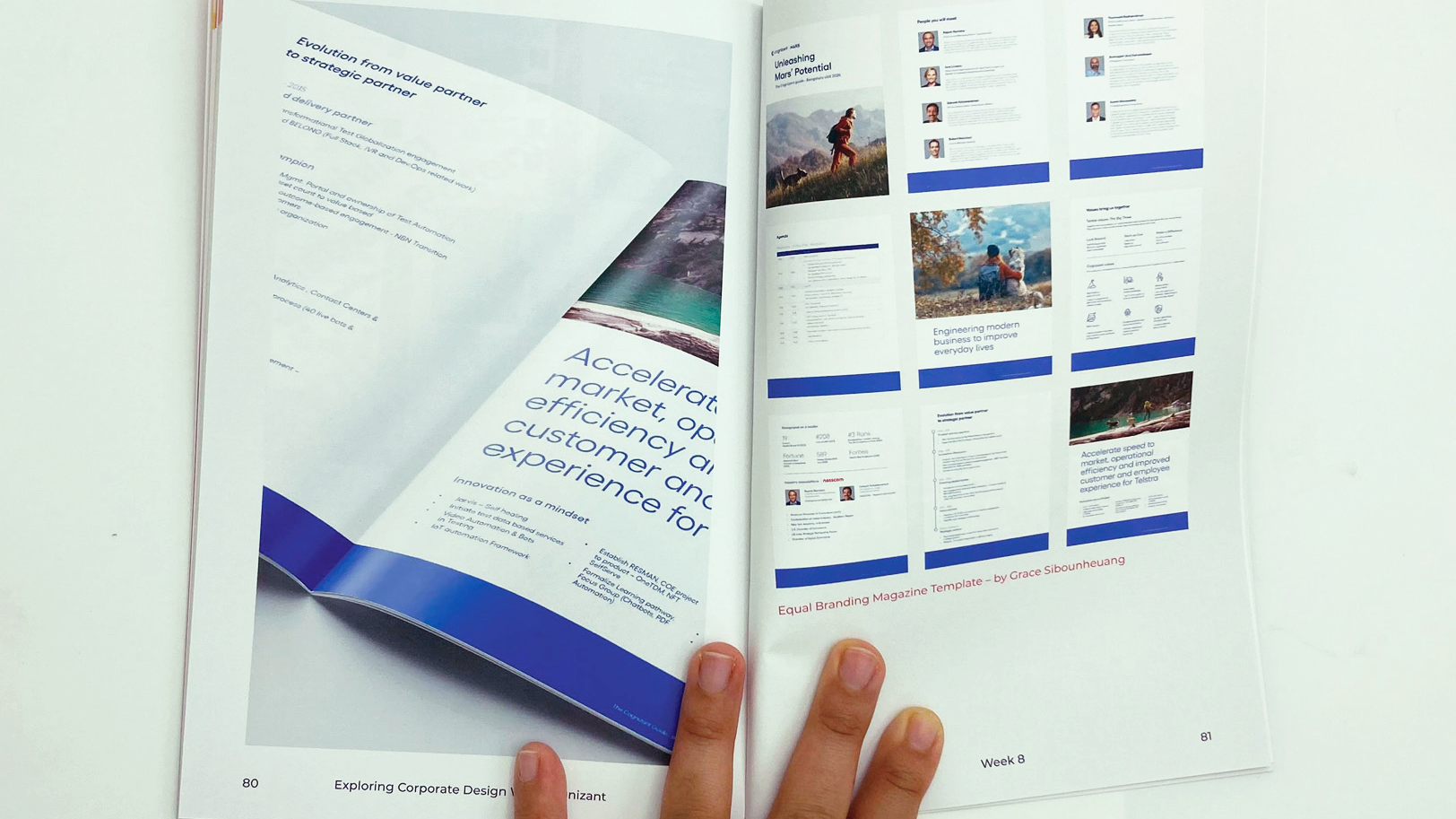
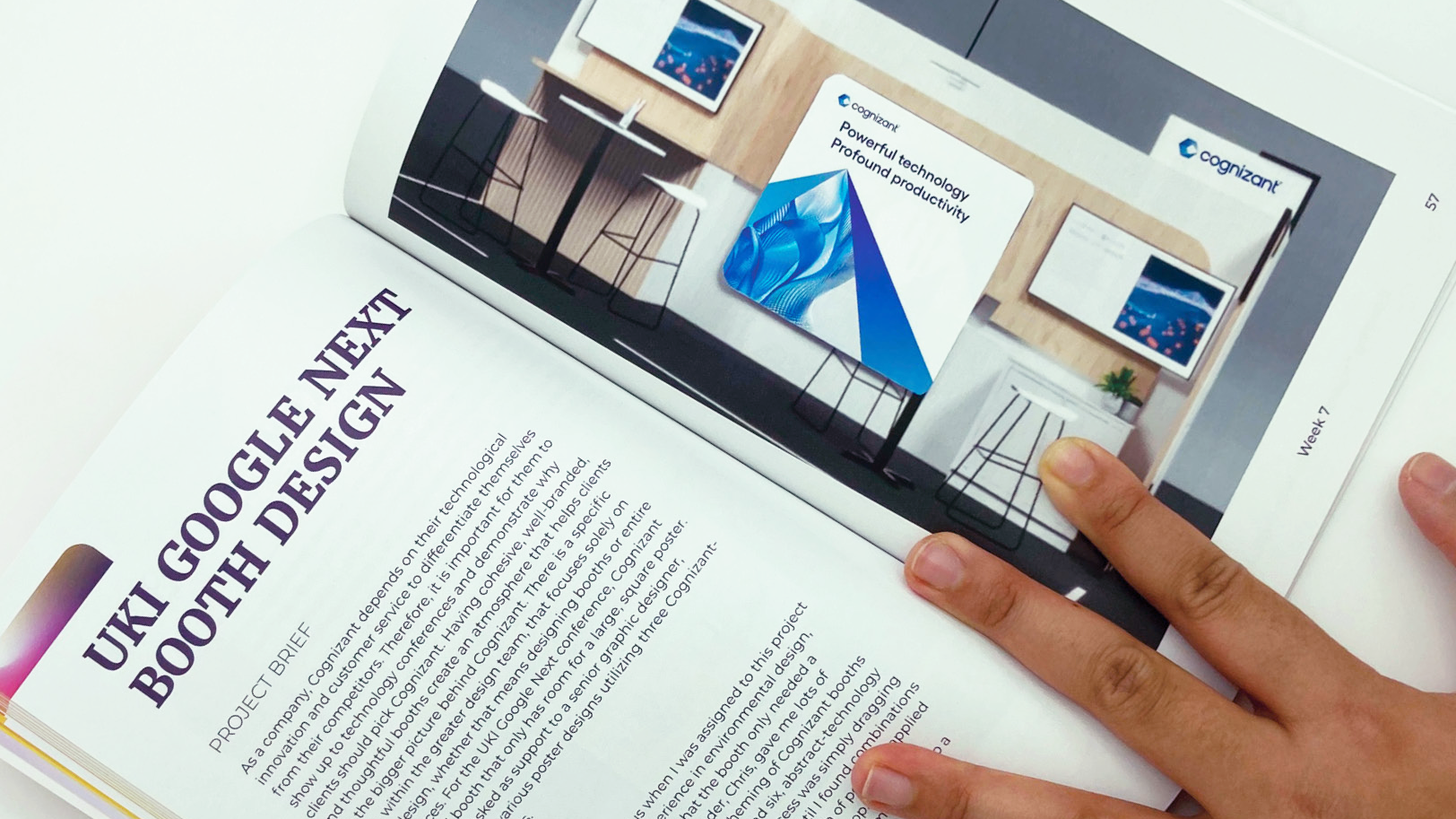
After completing the final layout, I exported the files as PDFs and utilized a third-party book publisher, Blurb, to professionally print, bind, and ship the final product.